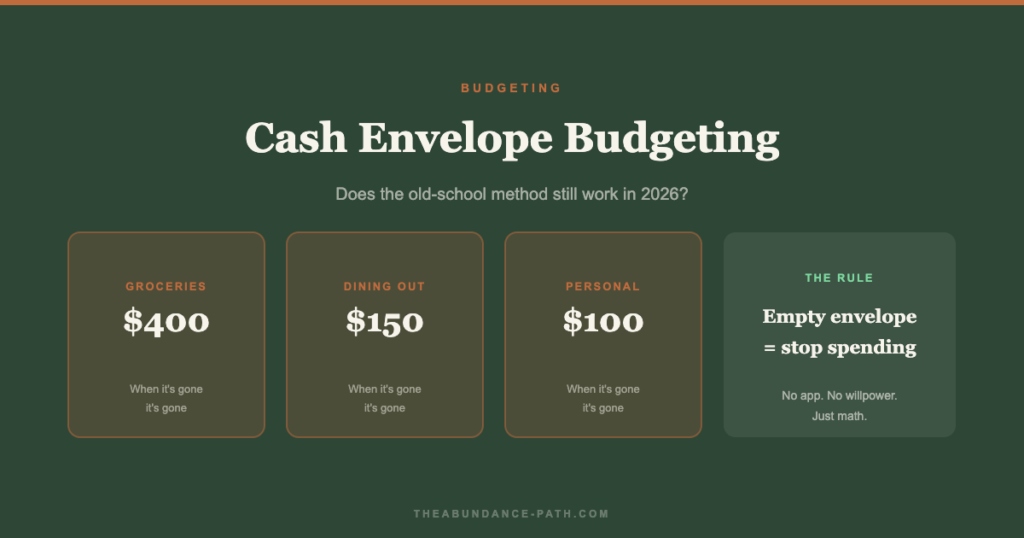
Cash envelope budgeting is exactly what it sounds like: you withdraw cash at the start of the month, divide it into labeled envelopes by category, and spend only what’s in the envelope.
When the envelope is empty, spending in that category stops.
It sounds outdated. In a world of tap-to-pay and digital wallets, carrying cash feels almost quaint. But for a specific type of spender, it works better than anything else — including apps.
Why Cash Works When Cards Don’t
Research consistently shows that people spend more when paying with cards than with cash. The physical act of handing over money creates a “pain of paying” that card swipes don’t.
When you pay with a card, the money feels abstract. When you hand over three $20 bills for a dinner, you feel every dollar. That friction changes behavior.
For chronic overspenders in specific categories — restaurants, shopping, entertainment — this friction is the whole point.
How to Set It Up
Step 1: Identify your problem categories. You don’t need to use cash for everything. Most people use envelopes for the 2–4 categories where they consistently overspend. Common ones: groceries, dining out, personal spending, entertainment.
Step 2: Set a monthly budget for each category. Based on your actual spending history, set a realistic — not optimistic — limit for each envelope.
Step 3: Withdraw cash on payday. Go to the ATM, withdraw the total, and divide it into labeled envelopes. Physical envelopes work fine. So do labeled sections in a wallet or a cash budgeting binder.
Step 4: Spend only from the envelope. When it’s gone, it’s gone. No transfers from other envelopes mid-month (unless you consciously decide to reallocate and accept the trade-off).
Step 5: Keep fixed expenses on autopay. Rent, utilities, subscriptions, insurance — these stay digital. The envelope system handles variable, discretionary spending only.
The Real Advantages
Spending stops automatically. You literally can’t overspend if there’s no cash left. No overdraft fees, no budget app guilt, no end-of-month shock.
No app required. You always know exactly where you stand — look in the envelope. Simple systems get used. Complex ones get abandoned.
Works for people who ignore apps. If you track spending in an app but check it a week later, it’s already too late. Cash provides real-time accountability at every purchase.
The Real Drawbacks
Inconvenient in 2026. Many places prefer or require digital payment. Online purchases, subscriptions, parking meters — all need cards. Cash-only budgeting isn’t realistic for most people’s full financial life.
No cashback rewards. If you use a rewards card responsibly, switching to cash costs you 1–2% back on spending. This is a real trade-off worth considering.
Safety and convenience. Lost cash is gone. It also requires ATM trips and carrying more physical items.
Digital Envelope Systems
If you like the logic but not the cash, digital envelope systems replicate the concept:
YNAB (You Need a Budget) — the most popular digital envelope app. Every dollar is assigned to a category before it’s spent.
EveryDollar — Dave Ramsey’s app, built around zero-based budgeting with envelope-style categories.
Multiple bank accounts — Some people open separate checking accounts for different spending categories and use debit cards tied to each. Slower to set up but completely free.
Who Should Use Cash Envelopes
Cash envelope budgeting works best for people who:
- Consistently overspend in 2–3 specific categories despite tracking
- Feel no “pain” when swiping a card
- Want a simple system with zero technology required
- Are paying off debt and need hard spending limits now
It’s not for everyone. If you’re already disciplined with a card, the friction of cash may slow you down without adding value. But if you’ve tried budgeting apps and keep overspending anyway — cash envelopes address the root problem that apps can’t.
The Bottom Line
Cash envelope budgeting works in 2026. Not for everyone — but for overspenders who’ve tried everything else, it works better than anything digital because it makes overspending physically impossible.
Try it for one category for one month. Pick your biggest problem area and put that month’s budget in an envelope. See what happens.
Whether you use cash envelopes or a spreadsheet, the free Abundance Path Starter Kit helps you plan and track your monthly budget in one place.
More articles
 Budget
Living Paycheck to Paycheck? These Traps Are Keeping You Broke
Living paycheck to paycheck isn't always about income. These hidden traps keep you broke — and here's how to break free of each one.
Read → Budget
The 50/30/20 Budget Rule: A Complete Guide for 2026
There’s a reason the 50/30/20 rule is the most recommended budgeting method on the planet. It works. Not because it’s complicated, but…
Read → Budget