Most people think they need more money. What they really need is a plan for the money they already have.
That plan is a budget.
I know. The word sounds boring. Restrictive. Like a diet for your bank account. But a real budget does the opposite. It gives you permission to spend — without the guilt, without the panic, without that end-of-month dread.
This guide will teach you how to budget from scratch. Even if you’ve tried before. Even if you’ve failed before. Even if your income is messy and your bills are scary.
We’ll go step by step. No jargon. No shame. Just a system that works.
Let’s start.
What a Budget Actually Is (and What It Isn’t)
A budget is just a plan for your money. That’s it.
It answers one simple question before the month begins: where is this money going to go?
That’s the whole idea. You decide on purpose, instead of finding out by accident.
Here’s what a budget is not. It’s not a punishment. It’s not about never having fun. It’s not a spreadsheet you build once and never open again.
A good budget is flexible. It bends with your life. It includes money for things you enjoy. And it changes every single month, because your life changes every single month.
Think of it less like a cage and more like a map. A cage holds you back. A map shows you the way.
Why Most Budgets Fail
Before we build yours, let’s understand why so many budgets collapse. Because if you know the traps, you can avoid them.
Most budgets fail for three reasons.
One: they’re built on fantasy. People budget for the person they wish they were, not the person they are. They write down $200 for groceries when they’ve spent $500 every month for a year.
Two: they forget real life. The budget looks perfect — until the car breaks down, or the birthday gift comes due, or the insurance bill lands. Then it falls apart.
Three: nobody checks them. A budget you set and forget is useless. It’s a plan with no follow-through.
We’re going to fix all three. Keep them in mind as we go.
Step 1: Know Exactly What You Earn
You can’t plan money you can’t measure. So we start with income.
Write down your take-home pay. That’s the amount that actually hits your account — after taxes, after deductions. Not your salary. The real number.
If you get paid twice a month, write both. If you have a side hustle, add it. Add everything that brings money in.
Now, what if your income jumps around? Freelancers, gig workers, commission earners — this is you.
Don’t panic. You can absolutely budget with an unsteady paycheck. It just takes a slightly different approach. I wrote a full walkthrough on exactly that here: How I Budget With Irregular Income. The short version: budget off your lowest typical month, and treat anything extra as a bonus.
Once you know your number, you have your ceiling. Every dollar you plan has to fit under it.
Step 2: Track What You Actually Spend
This step is uncomfortable. Do it anyway.
Pull up your last two or three months of bank and card statements. Go line by line. Write down where the money went.
Groceries. Gas. Rent. Streaming. Takeout. That random Amazon stuff. All of it.
Why three months? Because one month lies. One month might be unusually cheap or unusually wild. Three months shows you the truth — your real average.
Most people get a shock here. The takeout adds up to more than the car payment. The subscriptions total a small fortune. The “little” purchases aren’t little at all.
That shock is good. It’s the moment the invisible becomes visible. And you can’t fix what you can’t see.
Group your spending into categories as you go. Housing. Food. Transport. Fun. Debt. Subscriptions. You’ll use these in a minute.
Step 3: List Every Bill — Even the Sneaky Ones
Now list your fixed costs. The bills that show up every month, like clockwork.
Rent or mortgage. Utilities. Phone. Insurance. Minimum debt payments. Internet.
These are your non-negotiables. They come first.
But here’s the part most people miss. The sneaky expenses. The ones that don’t come monthly — so you forget them, and they wreck your budget when they hit.
Car registration. Annual subscriptions. Holiday gifts. Birthdays. Back-to-school costs. The dentist.
These aren’t surprises. You know they’re coming. So plan for them.
Here’s the trick: add up all your yearly irregular costs, divide by 12, and set that amount aside every month. This little stash is called a sinking fund. When the bill arrives, the cash is already waiting. No credit card. No stress.
Step 4: Choose a Budgeting Method That Fits You
Now we give your money a structure. There’s no single “right” budget. There are a few proven methods. Pick the one that fits your brain.
Here are the four most popular.
The 50/30/20 Rule
The simplest place to start. You split your take-home pay three ways: 50% to needs, 30% to wants, 20% to savings and debt.
It’s clean, it’s flexible, and it’s perfect for beginners. If you only try one method, try this one. I broke it down completely — with real examples — in The 50/30/20 Budget Rule: A Complete Guide.
The Zero-Based Budget
Here, every dollar gets a job. Income minus expenses equals zero — not because you spent it all, but because you assigned all of it. Even savings is a “job.”
It takes more effort. But it gives you the most control. Nothing slips through.
The Envelope System
Old-school but powerful. You put cash into envelopes labeled by category — groceries, gas, fun. When the envelope’s empty, you stop spending in that category.
Great for people who overspend with cards. The physical limit keeps you honest. (Digital versions exist too, if cash isn’t your thing.)
Pay Yourself First
The laziest method that still works. The moment you get paid, you move money to savings first. Then you live on what’s left.
It flips the usual order. Most people save whatever’s left at month’s end — which is nothing. This guarantees your future gets paid before your wants do.
You don’t have to marry one method. Many people mix them. Start with one, adjust as you learn.
Step 5: Give Every Paycheck a Plan
A monthly budget is great. But you don’t get paid monthly — you get paid in chunks. So you need to know what each paycheck is responsible for.
Which bills come out of the first check? Which come out of the second? When does the rent hit, and is the money there when it does?
This is where a lot of budgets quietly break. The math works on paper, but the timing doesn’t. The bill is due on the 3rd, but the paycheck lands on the 5th.
Map it out. Assign each bill to a specific paycheck. I walk through exactly how to do this in Paycheck Budgeting: Exactly Where Your Money Should Go.
When every paycheck has a clear job, the panic disappears. You always know the money will be there.
Step 6: Build Savings Into the Plan
Here’s a rule that changes everything. Savings is not what’s left over. Savings is a bill you pay yourself.
Put it in the budget like rent. Non-negotiable.
Start with an emergency fund. This is your buffer against life — the flat tire, the surprise bill, the lost job. Without it, every emergency becomes debt.
Aim for a small first goal. Even $500 changes things. Then build toward a full cushion. Here’s a step-by-step plan to get there from nothing: How to Build a $5,000 Emergency Fund Starting From Zero.
And here’s the secret to actually doing it: make it automatic. Set up a transfer that moves money to savings the day after payday, before you can spend it. You won’t miss what you never see. I show you how here: How to Set Up Automatic Savings.
Automation beats willpower every time. Willpower runs out. A scheduled transfer doesn’t.
Step 7: Track, Review, and Adjust
This is the step that separates budgets that work from budgets that die.
A budget is not a one-time document. It’s a living thing. You have to check in.
Twice a week, open your account. Five minutes. Compare what you’ve spent to your plan. Are you on track? Did something go sideways? Adjust the rest of the month while you still can.
These tiny check-ins catch problems early — back when they’re still small and fixable. I built a simple 15-minute routine for this: Weekly Money Check-In: How to Review Your Finances in 15 Minutes.
Then, on the first of every month, do a bigger reset. Update your income. Adjust your categories. Account for anything new — a raise, a move, a new bill. Build next month fresh.
A budget that evolves with you stays useful. A frozen one slowly drifts into fiction.
Tools That Make Budgeting Easier
You can budget with a pen and paper. Honestly, that works fine. But the right tools remove friction — and less friction means you’ll actually stick with it.
A budgeting app can track your spending automatically, sort it into categories, and warn you when you’re close to a limit. No manual entry. The best part? Many of the good ones are free. I ranked them here: Best Free Budgeting Apps Ranked for 2026.
And since groceries are the category most people overspend on, it’s worth tackling that one directly. A few small swaps at the store can free up serious cash every month. Start with these: Grocery Budget Hacks.
Pick tools that fit how you already live. The best budgeting tool is the one you’ll actually use.
The Budgeting Mistakes to Avoid
Even a good budget can be quietly sabotaged by small, common errors. You’ve already learned a few — building on fantasy, forgetting irregular bills, never checking in.
But there are more. Treating wants as needs. Quitting after one bad day. Saving only the leftovers. Each one is a slow leak in an otherwise solid plan.
I pulled together the full list — and the fix for each — in Budgeting Mistakes That Quietly Drain Your Bank Account. Read it once you’ve built your budget. It’ll help you protect it.
How to Actually Stick to Your Budget
Building a budget is the easy part. Sticking to it is the real game. So let’s talk about that.
First: aim for progress, not perfection. You will overspend sometimes. Everyone does. One bad weekend doesn’t ruin a budget — quitting does. Treat a slip like a diet treats one cookie. Adjust, and keep going.
Second: make it visible. Keep your budget somewhere you’ll see it. An app on your phone. A note on the fridge. Out of sight is out of mind.
Third: budget for fun. A budget with zero joy in it won’t survive the week. Give yourself a guilt-free spending category. When fun is in the plan, you stop feeling deprived.
Fourth: celebrate the wins. Paid off a card? Hit a savings goal? Notice it. Money progress is invisible unless you look — so look, and let it motivate you.
Fifth: be patient. Your first budget will be wrong. So will your second. By the third or fourth month, it clicks. Give it time.
Your First Budget, Step by Step
Let’s pull it all together. Here’s your entire plan in one place:
- Add up your income. Real take-home pay.
- Track your spending. Last three months, line by line.
- List your bills — including the sneaky irregular ones. Build a sinking fund.
- Pick a method. Start with 50/30/20 if you’re unsure.
- Plan each paycheck. Give every dollar a job and a timing.
- Pay yourself first. Automate savings before you can spend it.
- Check in twice a week. Reset monthly. Keep it alive.
Do these seven things and you have a real budget. Not a wish. A working system.
The Bottom Line
Budgeting isn’t about restriction. It’s about direction.
It’s the difference between wondering where your money went and telling it where to go. Between dreading the end of the month and feeling calm about it. Between feeling broke and feeling in control — even on the exact same income.
You don’t need a bigger paycheck to change your life. You need a plan for the one you’ve got.
So start today. Not Monday. Not next month. Today. Add up your income. Track one week of spending. Take the first small step.
Because that’s how this works. Small steps. Smart money. A bigger life — built one budget at a time.
More articles
 Budget
Budgeting Mistakes That Quietly Drain Your Bank Account Every Month
It’s the end of the month. You check your balance. And there it is again — that sinking feeling. Where did all…
Read →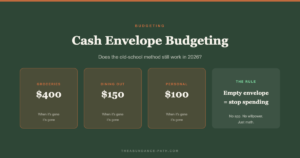 Budget
Cash Envelope Budgeting: Does the Old-School Method Still Work in 2026?
Stuffing cash into envelopes sounds outdated. But for people who overspend on cards, it's one of the most effective budgeting methods available. Here's the honest answer.
Read →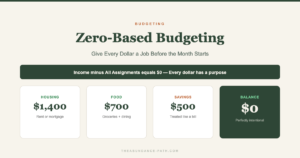 Budget
Zero-Based Budgeting: How to Give Every Dollar a Job
Zero-based budgeting means every dollar has a purpose before the month starts. It sounds rigid. It's actually the most freeing way to handle money.
Read →